
GPR vs EMI: Choosing the Right Locating Method
Expert Service Locating
March 30, 2026
7 min read
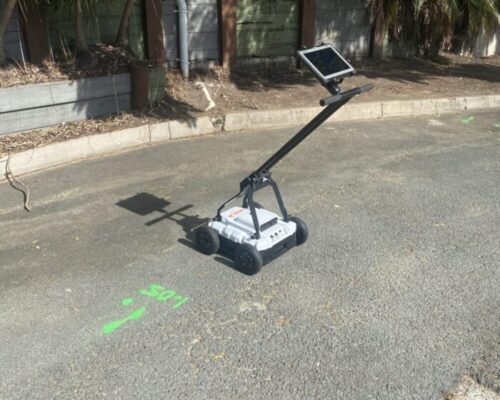
Electromagnetic induction and ground penetrating radar answer different questions. Here is what each method finds, and how Queensland and New South Wales soils affect the result.
Relying on a single detection method increases the chance of a missed asset. Modern utility detection uses more than one technique to account for different material types and site constraints, which produces a more complete survey of the work zone.
Electromagnetic induction (EMI)
EMI locating is the industry standard for metallic and conductive assets, including many power cables, metal pipes, and gas lines fitted with a tracer wire. By applying a signal to the target line and tracing it across the site, technicians follow the actual route rather than guessing from surface clues, and can give a depth indication in the right conditions. It is fast and non-invasive.
Ground penetrating radar (GPR)
As infrastructure shifts toward non-metallic materials, locating non-conductive services has become more common. Where conditions allow, GPR helps indicate PVC, PE and fibre optic conduits by detecting density changes and voids in the ground. Results can vary based on soil conditions, moisture, depth, congestion and surface access, so GPR is best used alongside EMI rather than instead of it.
The soil physics most guides skip
In many parts of Queensland and New South Wales, high clay content and soil salinity act as a shield that significantly reduces the effective depth of a GPR survey. This is where technical expertise outweighs the equipment. An experienced locator knows how to calibrate for heavy Brisbane clay or coastal sands, and will tell you honestly what the ground will and will not allow.
Setting realistic expectations
Setting expectations early helps a team choose the right method and the right verification step. Where radar returns are limited by ground conditions, the answer is usually a combination of EMI tracing, careful surface inspection, and physical verification at the critical dig points.
Related Articles
Beyond the BYDA Plan: Managing Subsurface Risk
BYDA plans show intended placement, not verified position. Here is why on-site locating is the step that turns…
AS 5488 Quality Levels Explained
Quality Level D through to Quality Level A. A plain English breakdown of the Australian standard for utility information and what each level actually gives a contractor…
Building a Zero-Strike Site Protocol
Moving beyond luck based excavation. A practical utility strike prevention sequence covering enquiries, site…