
AS 5488 Quality Levels Explained
Expert Service Locating
April 8, 2026
5 min read
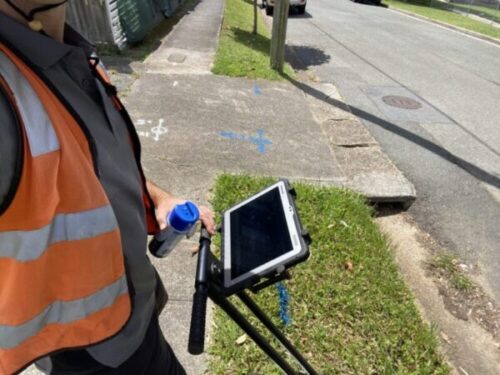
Quality Level D through to Quality Level A. A plain English breakdown of the Australian standard for utility information and what each level actually gives a contractor.
AS 5488 is the Australian standard for classifying subsurface utility information. For a civil contractor, understanding the quality levels helps close the gap between records based assumptions and verified site information, and it makes tender and design conversations far clearer.
The four quality levels
- Quality Level D (records): the most basic level, derived solely from existing utility owner plans with no physical verification.
- Quality Level C (surface survey): records correlated with visible on-site features such as hydrants, valve boxes and pit lids.
- Quality Level B (electronic detection): geophysical tools such as electromagnetic locating or radar based methods provide the best available relative 3D position.
- Quality Level A (verification): the highest confidence level, involving physical exposure such as potholing to confirm exact position and depth.
Choosing the right level for the job
Not every project needs Quality Level A across the whole site. A sensible approach is to work at Quality Level B across the general work area and step up to Quality Level A at the specific points where you intend to break ground, connect, or bore. That keeps cost proportionate to risk while still giving the crew verified information where it counts.
Why the level should be stated
Naming the quality level in your documentation removes ambiguity. A designer reading a Quality Level D markup knows to leave generous clearance. A supervisor reading a Quality Level A pothole record knows the depth is confirmed. When the level is not stated, everyone assumes a different degree of confidence, and that is where avoidable strikes tend to start.
Related Articles
Beyond the BYDA Plan: Managing Subsurface Risk
BYDA plans show intended placement, not verified position. Here is why on-site locating is the step that turns….
GPR vs EMI: Choosing the Right Locating Method
Electromagnetic induction and ground penetrating radar answer different questions. Here is what each method finds, and how Queensland and New South Wales soils….
Building a Zero-Strike Site Protocol
Moving beyond luck based excavation. A practical utility strike prevention sequence covering enquiries, site inspection, tolerance zones and ongoing verification….